The imperatives and challenges of sustainable flexible packaging regulation
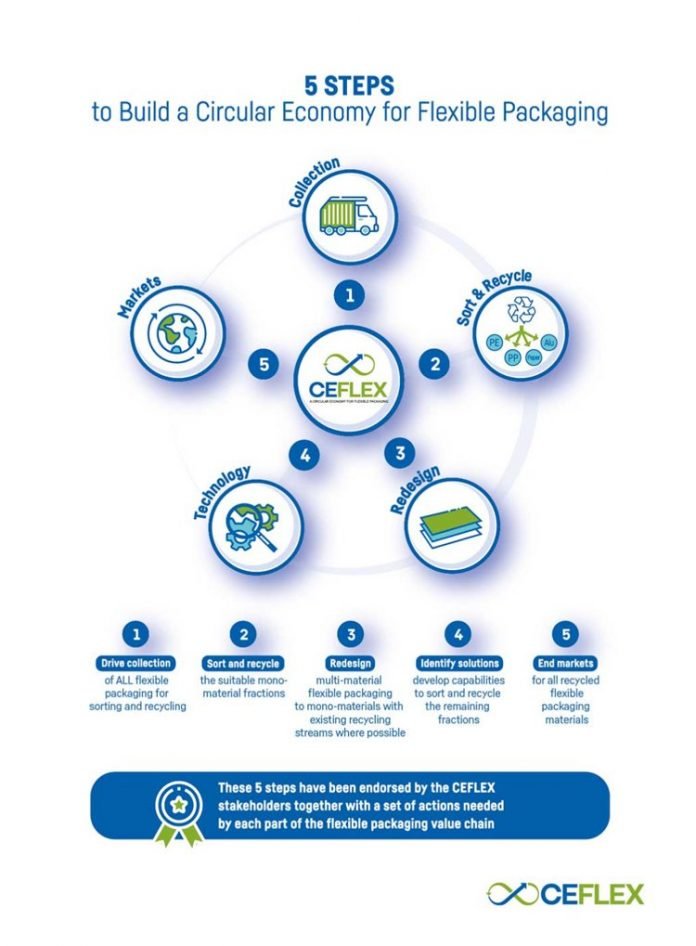
The latest update on the CEFLEX website at end-June notably asks for the Member States to grant sufficient time for innovative packaging and the requisite calibration-upwards of new sorting and recycling infrastructure to be five rather than 2 years. Notwithstanding, please notation that the collaboration of European companies, associations, and organizations representing the unabridged value aims to make all flexible packaging in Europe circular past 2025. This appointment will bear upon the export of both consumer products and packaging from India. At the aforementioned time, the diluted government regulations on the waste control order yet need to ascertain the next steps. This process seems to exist delayed considering of the pandemic but needs to be urgently looked at and brought forward.
Both citizens and some of the global and Indian brands are groovy to have the circular economy farther. However, it is unfair to some companies if in that location is petty or no progress on regulation, recognizing there has to be a residual between progress and growth. Several Indian and global companies are taking up waste drove and recycling of plastic and flexible packaging and using more sustainable materials and processes. Still, voluntary efforts will remain asymmetrical equally far as costs and cannot achieve what regulation can. Typically, manufacture in Bharat prospers with less regulation, just hither is a example where peradventure only law can create a healthy and fair ecosystem and desirable outcomes for all.
Nosotros reproduce below the nearly contempo CEFLEX update from www.ceflex.eu and encourage y'all to download the entire CEFLEX certificate Designing, Developing and Delivering the Circular Economy for Consumer Flexible Packaging from https://chip.ly/3qDZ85Z.
The critical function of circular economy guidelines
The Round Economic system for Flexible Packaging (CEFLEX) initiative is a collaboration of over 170 European companies, associations and organizations representing the entire value concatenation of flexible packaging – from raw material producers, packaging converters, brands, retailers, recyclers, suppliers and beyond. Together, we piece of work to make all flexible packaging in Europe circular by 2025.
The CEFLEX 'Mission Round' vision commits to drove of all flexible packaging with over eighty% of the materials entering a recycling process to be returned to the economy and used by sustainable end marketplace to substitute virgin materials. To deliver the round economic system, information technology is imperative the Packaging and Packaging Waste Directive revision recognise the CEFLEX Designing for a Circular Economic system guideline applicability for household consumer flexible packaging applications.
Cardinal Messages
- Recyclable, lite weight, resource efficient flexible packaging is a key enabler of achieving the Eu Dark-green Bargain objectives of climate neutrality past 2050 and recyclable packaging in a viable and cost-efficient manner by 2030.
- Defining recyclability is packaging format specific and needs to be based on agreed design for recycling guidelines. Setting a blanket 95% target cloth recyclability threshold for all packaging would seriously impact flexible packaging's ability to deliver the required functionality.
- We telephone call for CEFLEX Designing for a Circular Economic system (D4ACE) Guidelines to exist legally recognised equally the guidelines by which industry and legislation assess 'recyclability' for consumer flexible packaging1 below A4 size.
- The CEFLEX (D4ACE) Guidelines have been developed via multi-stakeholder inputs and are endorsed by a pregnant percentage of actors beyond the full consumer flexible packaging value chain including plastic producers, flick producers and converters, brand owners and retailers, the collectors, sorters and recyclers and many others.
- For plastic-based consumer flexible packaging1, CEFLEX D4ACE Guidelines require at least xc% of the functional unit to be the targeted mono-material for it to be deemed recyclable: i.e., fully compatible with mechanical recycling.
- We call for the PPWD legislation to promote, incentivize and facilitate the investments in collection, sorting and recycling (mechanical, physical and chemical) infrastructure that will ensure the recycling of flexible packaging towards the attainment of Eu's plastics packaging recycling targets and the circular economy.
- We ask for Fellow member States to grant sufficient time for innovative packaging and the requisite scale upwards of new sorting and recycling infrastructure to be 5 rather than two years.
lockhartagnat1998.blogspot.com
Source: https://packagingsouthasia.com/type-of-packaging/flexible-packaging/ceflex/

Post a Comment for "The imperatives and challenges of sustainable flexible packaging regulation"